
Museums ~ Gov. Stephen Hopkins House, Providence
Gov. Stephen Hopkins House (15 Hopkins Street, Providence)
Address:
15 Hopkins Street
Providence, Rhode Island
We have walked past this little landmark off Benefit Street more times than I can count, and for years it felt like a closed door in plain sight. Then, on a lucky day during the RISD Spring Art Sale, it was open, a docent was inside, and we found ourselves on a tour that cost three dollars and delivered centuries.
This was the home of Stephen Hopkins, ten-time governor of Rhode Island and a signer of the Declaration of Independence. It is also a rare chance to step into an early Providence house that still reads like its own timeline: a smaller, older core and a larger, later expansion stitched into one long-lived story.
Architecture and changes over time
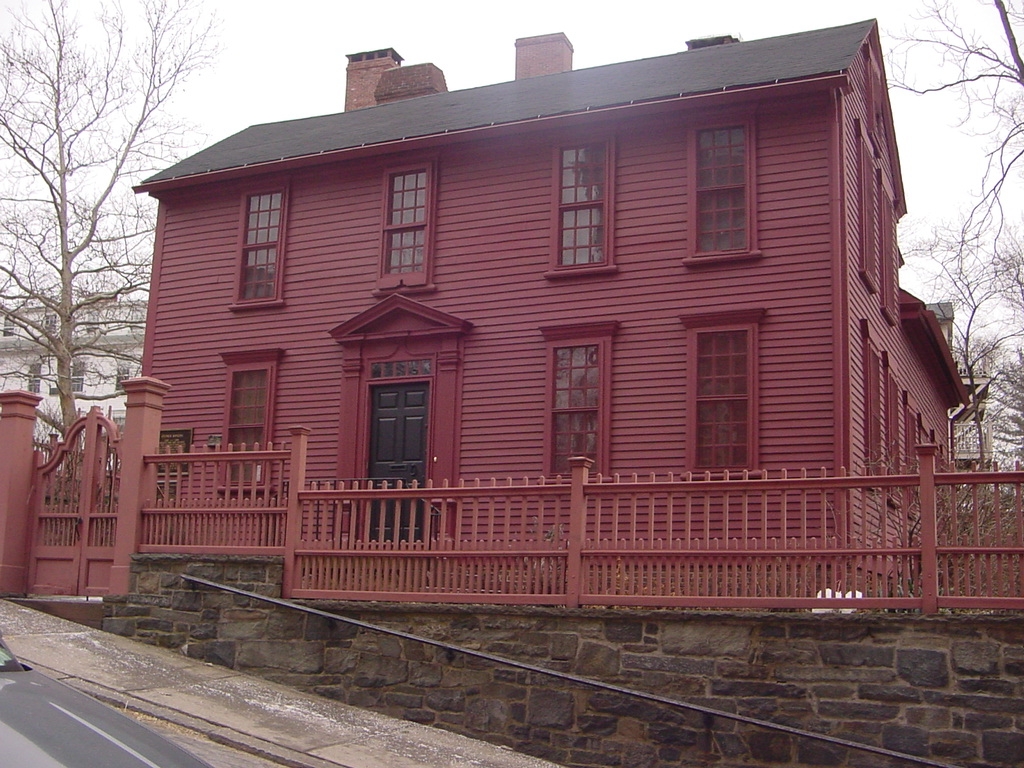
Like most older houses, it started small, as the first floor of what is now the two-story building. The original section dates to the early 1707. The the second floor was built, and finally the house was expanded in the 1740s, creating an L-shaped Georgian-era frame house. The structure was also moved twice: from where it was first built at the corner of Hopkins and North Main (formerly Towne) Street, then halfway up the block, and finally across the street, and up to the corner of Benefit and Hopkins. It was carefully restored in the late 1920s by the grandaddy of historic restoration, Norman Isham.
Even if you only have a few minutes outside, look for the proportions and practical details that signal a Georgian house: balanced windows, a central hall plan, and chimneys that anchor the building.
"Ah, but it's not balanced!" you say. The door that takes the place of a first-floor window is a 20th century alteration.
Inside, the woodwork, stair details, and fireplaces are the kind of everyday craftsmanship lasts nearly 300 years.
_(cropped).jpg)
|
| Portrait of Gov. Hopkins by Henry Bryan Hall, via Wikimedia Commons and NYPL, Public Domain. |
Rooms with views of everyday life
The docent walked us through a sequence of rooms that made the house feel less like a museum and more like a lived-in place. The keeping room functioned as the heart of the earlier house: practical, warm, and anchored by a fireplace. It is the kind of room that makes you stop thinking about dates and start thinking about winter.

The later addition includes a study and parlor that feel more formal, and one detail that is easy to remember even after you leave: the fireplace surround with built-in cabinetry and carved shell motif. These details are unusual to find together, and the docent said they were an indicator of the Hopkins' wealth. It's the first time I remember seeing an insert like that, but it strikes me as very Rhode Island.


Revolutionary Rhode Island, in one upstairs room
Upstairs, the most famous detail is the bedchamber associated with one of George Washington’s two visits. It is a reminder that Providence was not a backdrop to the Revolution. It was a working town with political influence, maritime reach, and a constant negotiation between local life and continental urgency. During Washington's 1776 visit, Hopkins was a delegate to the Continental Congress in Philadelphia.

Across the hall is a smaller bedroom that would have been part of the family’s day-to-day private world. Our tour that day lingered on objects that make history feel specific: a cradle that held Stephen Hopkins and his younger brother Ethan, as well as Stephen's and his wife Sarah's seven children. It made me wonder how many other children were rocked in that cradle since 1707.

Do not skip the garden
When the interior tour ended, we wandered outside into the terraced garden. It is a gentle surprise: a small, pretty space that feels intentionally separate from the street, like Providence is letting you step out of traffic and into a quieter century.


Planning note
Hours and access for small historic sites can be variable. Before you build a day around it, check the official site for current hours.
Bottom line: Gov. Stephen Hopkins House is a small museum with big payoff. The tour is short, but the details stay with you, especially if you like early architecture, lived-in rooms, and the feeling of finding a door that finally opens.


This comment has been removed by a blog administrator.
ReplyDelete